I got my best-paying job from a Reddit post. Here's exactly how it happened.
The best-paying and most interesting job I've had came from a job post on Reddit. I know how that sounds. Reddit isn't where people normally find jobs, and when I tell people, they're surprised. Fair enough. I was too.
This is one hire, mine, so it isn't a method and I won't pretend it is. But the details are short and specific, and I think they're worth writing down for students who only ever look at job boards.
How did a Reddit job post turn into an offer in two days?
The post was in a Lahore subreddit, Lahore Social. It was an ordinary job post, written by an engineer. At the time he was the only AI engineer on the team, which was a small group supporting a large American company.
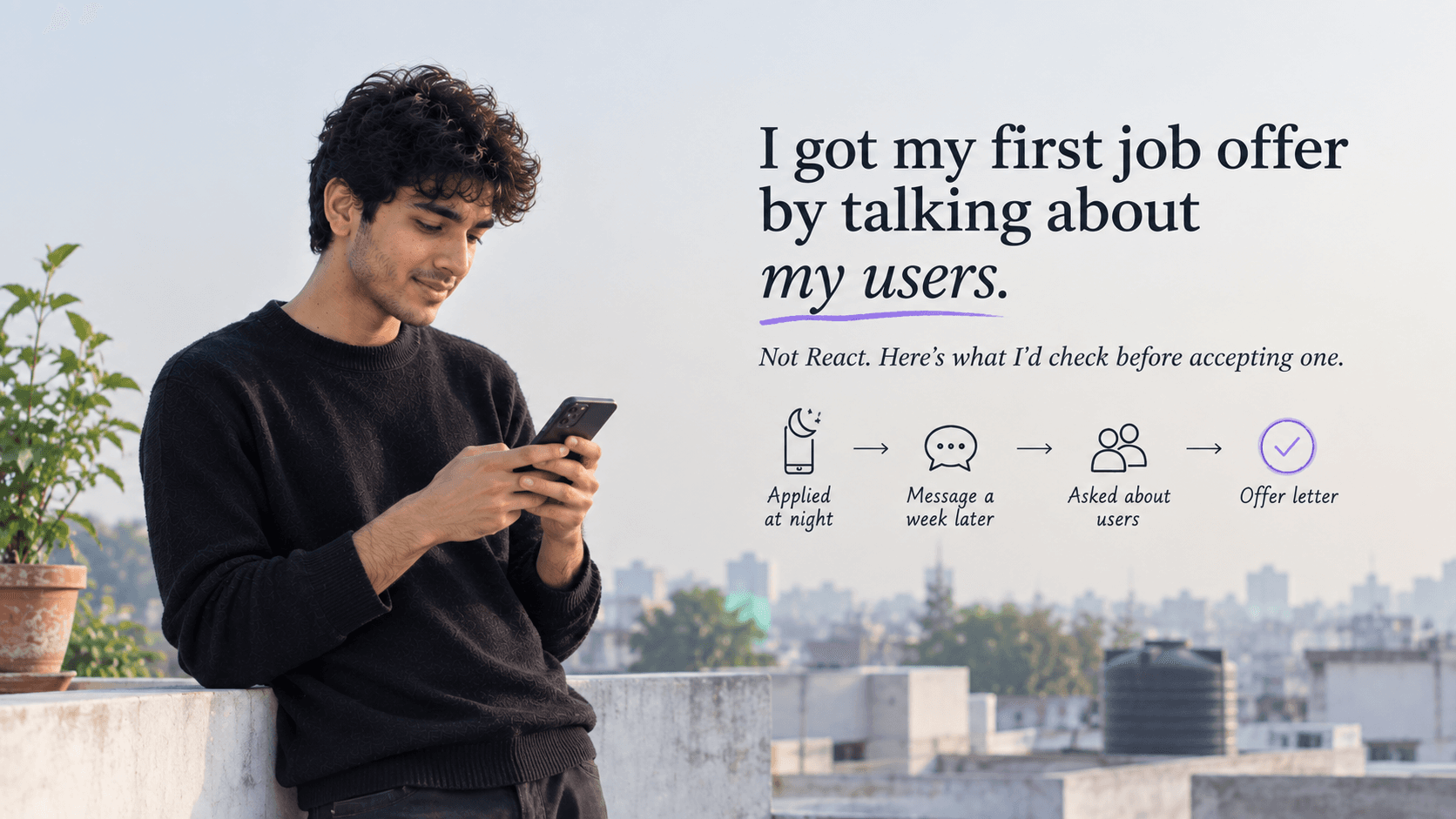
I didn't send my CV first. I sent him a direct message instead. This is close to word for word what I wrote:
Hey I am an AI/ML engineer looking for new challenges to take on, what are you guys working on
Then I asked about the job itself: what the role involved, what projects they were working on, and what the environment would be like for the person who joined. Once I had answers, I shared my CV.
Two days later I'd had the interview and the offer. There was only one round, and they gave me the offer on the spot. He had interviewed other candidates before me, so I wasn't the first person he spoke to. I was the one he hired, and the position was closed after that.
Why did I message before sending a CV?
Mostly because I wanted to know what I was walking into. A job post tells you the title and a list of tools. It doesn't tell you what you'd build, or who you'd sit next to.
Look at the message again. It doesn't say "I'm applying for the position." It says what I do, and then asks what they're working on. That's a question one engineer asks another.
I can't tell you what he thought of it, because I never asked him. What I can say is that it changed what the first conversation was. I wasn't an unnamed CV in a pile. I'd already asked about his work, and he'd already answered me as a person.
What did the interview actually ask?
One question stuck with me, and I'll give it to you as I remember it:
How would you handle incoming big data files and dump them to S3? The data is only available for a short while, and we have to make sure no data is lost.
There's no trick in it and no formula to recite. It's a real problem from their work, with two constraints that pull against each other. The data disappears if you're slow, and you can't lose any of it if you're careless.
My answer was built around those two constraints. Don't make the incoming files wait on any slow work. Put each one on a queue the moment it arrives, so nothing is lost while the rest is being processed, and let workers pick files off the queue and dump them to S3 at their own pace. Anything that has to go into a database goes into a staging table with no indexes, because inserting into an unindexed table is much faster. You add indexes later, once the data is safely stored and nothing is racing against you.
None of that is clever. Each piece answers one way of losing data or losing time, and that's the point.
That's what I mean by fundamentals. A question like this doesn't reward having memorised the right tool. It rewards working out what could go wrong and building the answer around that. If you know why files get lost in transit, you can reason your way to a design even for a setup you haven't seen.
That's the other half of why I got the job. The message got me a conversation, but my problem solving and my grip on the core concepts got me through it. If you have a good grip on those, you can get through most of the questions in an interview.
What would I tell a student who finds a job post somewhere unusual?
Four things, all from what happened to me:
- Notice who wrote the post. An engineer describing his own team reads differently from a recruiter's template, and you can reply to him as one engineer to another.
- Ask real questions before you send anything. Ask about the work and the environment, the things you'd want to know anyway.
- Move quickly. He had already interviewed people before me, and the position closed once I was hired. Waiting a week might have cost me the job.
- Know your fundamentals. The interview was one round, and it decided everything.
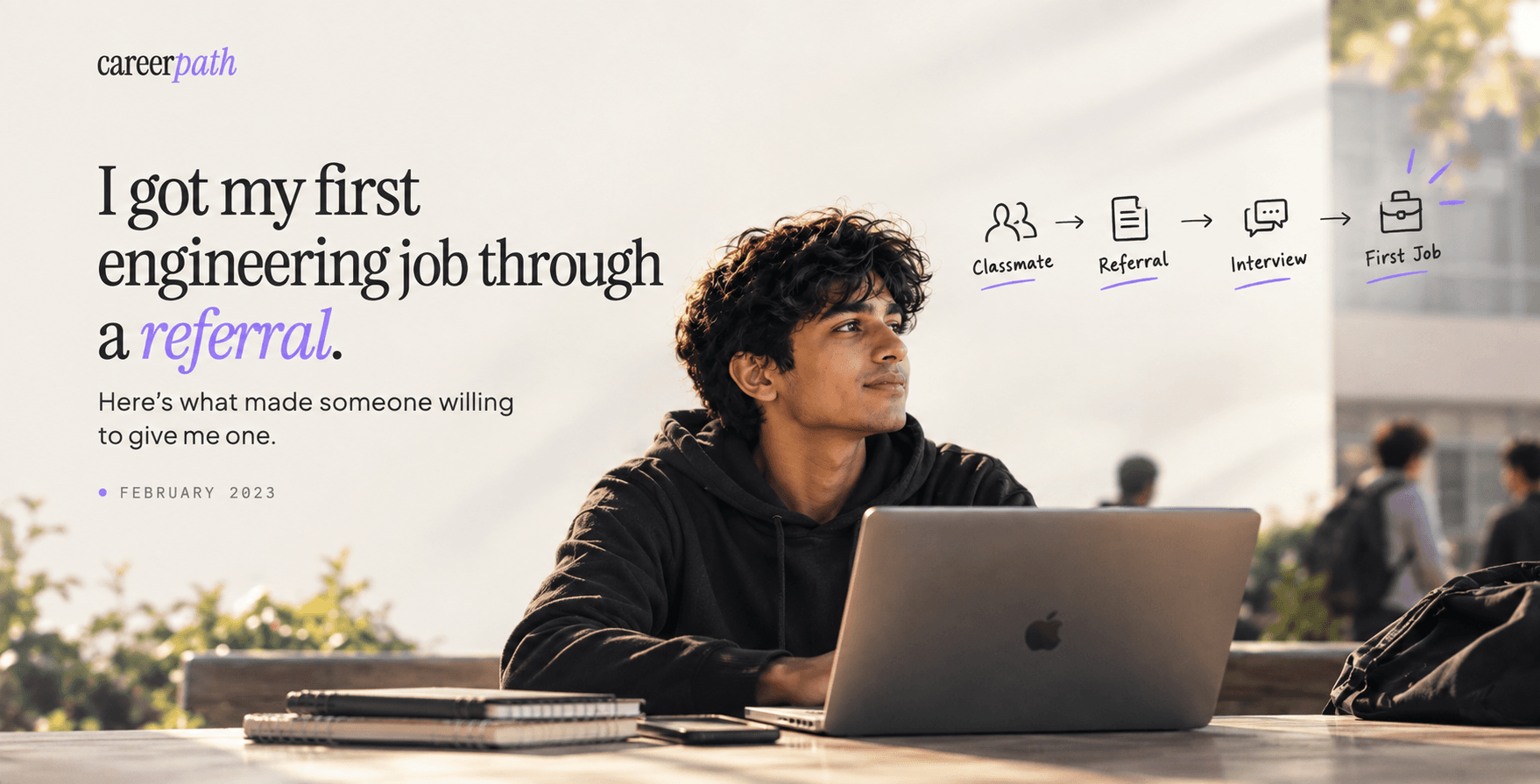
I can't tell you how many other people replied to that post, or what they sent. That's the limit of what I know. I also got in through a stranger's post, which isn't the same as how a referral got me into my first engineering job. Both came down to the same thing: someone had to be willing to talk to me, and I had to be ready when they did.

Machine Learning Engineer · Revcloud
I'm a machine learning engineer at Revcloud. I build the ML systems that serve about 50,000 people a day, plus the AWS and Azure infrastructure they run on. I finished my computer science degree at COMSATS in 2025, but I'd already been working as an engineer since my second year. I've also sat on the other side of the interview table for around twenty candidates in backend, AI and web roles. Most of what I write here comes out of that.